This new call for proposals is not about basic research. KOKI does not typically participate in calls like this. The winning teams were expected to demonstrate the technological maturity of their developments, as well as the project’s feasibility in addition to its anticipated social and economic benefits—and yet, two applicants from KOKI were among the 14 winners. Hats off to them!
No researcher need fear that one day there will be nothing left to discover.
Our understanding of the brain’s anatomy is not yet complete, even though its first comprehensive scientific map—the Brodmann map, which remains well-known today—was published as early as 1909; a hundred years later, in 2011, the Allen Institute for Brain Science published the first genetic map of the human brain, and since 2013, anyone has been able to explore a three-dimensional digital model of the human brain with a resolution of 20 micrometers, and with the help of modern imaging techniques and cell-level analyses, there is still a chance today for anyone who asks the right questions, possesses excellent knowledge of neuroanatomy and methodology, and is not afraid of long-term work to discover previously unidentified clusters of neurons—known in neuroanatomy as “nuclei.”
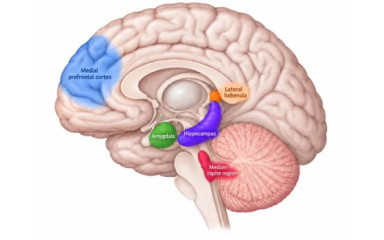
Gábor Nyiri and his team have already discovered a brainstem region that plays a key role in processing emotions and regulating motivational processes; in their paper just published in Nature Communications, they describe a neural circuit that links memory recall to the fear response.
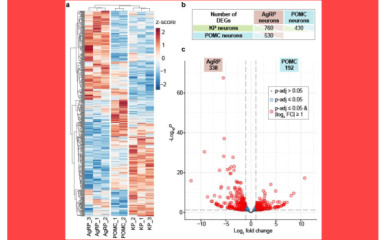
The work of our institute’s Reproductive Neurobiology Research Group was published in the August 2026 issue of Nature Communications. Group leader Erik Hrabovszky, who directed and organized the work, is the last author of the article, and Szabolcs Takács, a member of his group and the first author of the publication, answers our questions.
When we recall an unpleasant memory, we do not simply replay it as detached observers watching a scene from a film: we often re-experience the emotion, including the fear, associated with the original event. Researchers at the HUN-REN Institute of Experimental Medicine are helping to explain how the brain links the retrieval of a memory to the accompanying feeling of fear. Their findings shed light on how persistent activity in this system may contribute to anxiety, post-traumatic stress disorder and depression.
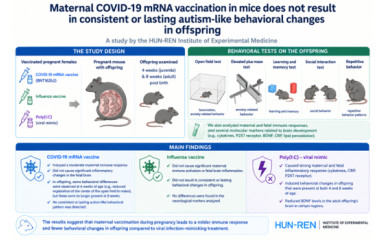
A new study in mice has found that COVID-19 or influenza vaccination during pregnancy does not cause the neurological changes that a real infection can trigger in the offspring. Researchers at the HUN-REN Institute of Experimental Medicine found that a treatment mimicking a viral infection produced a lasting, autism-like behavioural pattern in mouse pups, whereas the vaccines caused only mild, transient differences. The results therefore point clearly in favour of getting vaccinated.
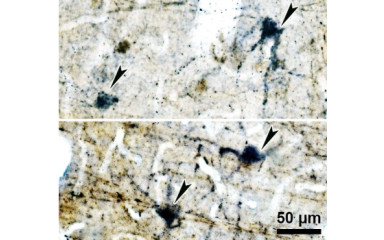
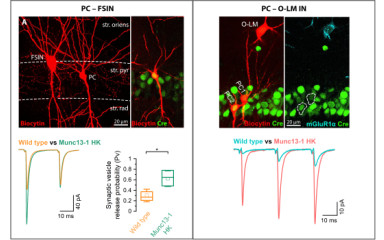
Every time one nerve cell communicates with another, small structures at the synapse called vesicles release chemical messengers into the synaptic cleft between the cells. Before a vesicle can release its contents, however, it must first be prepared, or “primed” for release. The new study by Aldahabi and colleagues examines how this priming step affects the strength and diversity of connections between nerve cells.
Several researchers from our institute also applied for the Bolyai Fellowship, the most prestigious scholarship for young researchers in Hungary, which was awarded this year to Balázs Göcz. Congratulations!