





A Key Protein Tunes the Strength of Communication Between Nerve Cells
Every time one nerve cell communicates with another, small structures at the synapse called vesicles release chemical messengers into the synaptic cleft between the cells. Before a vesicle can release its contents, however, it must first be prepared, or “primed” for release. The new study by Aldahabi and colleagues examines how this priming step affects the strength and diversity of connections between nerve cells.
The researchers developed a genetic method in mice that allowed them to selectively increase the activity of Munc13-1, a protein that plays a central role in preparing synaptic vesicles for release (main priming molecule). They found that increasing Munc13-1 activity made hippocampal synapses stronger. Importantly, the stronger signal was not caused by having more release sites or by making each individual vesicle contain more neurotransmitter. Instead, the researchers concluded that a larger proportion of vesicles were in a well-primed state and ready to fuse.
This finding is significant because neuroscientists have long known that different synapses can release neurotransmitters with different probabilities, but it has been difficult to determine why. The study provides strong evidence that differences in vesicle priming are the main reason why neurotransmitter release varies depending on the type of postsynaptic cell being targeted. In other words, synapses can behave differently not simply because they contain different numbers of vesicles, but because different fractions of those vesicles are prepared for action.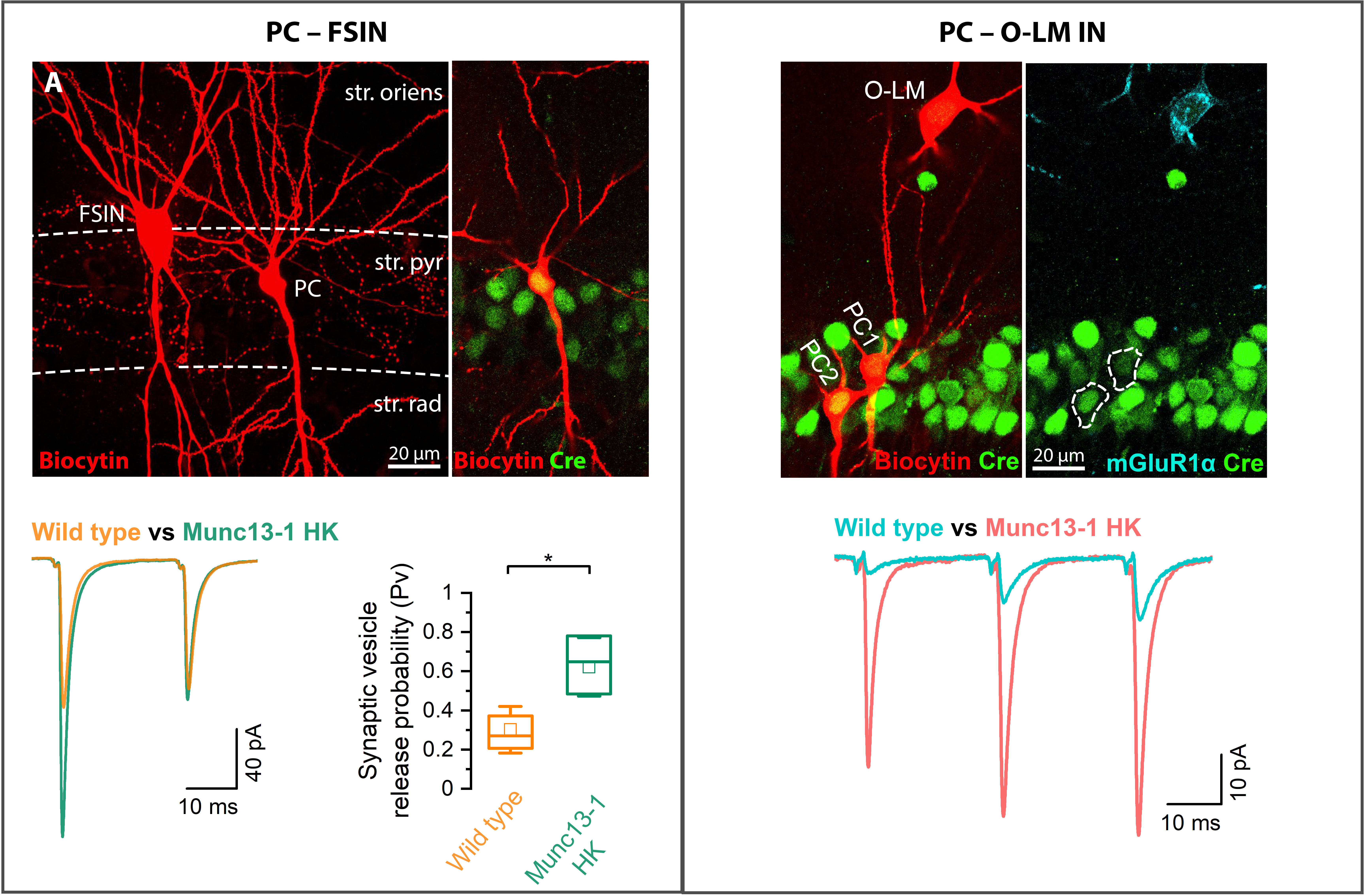
Munc13-1 HK mutation strengthens communication between hippocampal neurons with a greater effect at weaker synapses
Understanding this mechanism could improve our knowledge of how neural circuits process information and how synaptic function may change in neurological disorders.