





Closing conference of National Bran Research Program 3.0
As with previous events, the fourth and final conference of the National Brain Research Program (NAP) 3.0 was held at the Puchner Estate in Bikal.
Participants in the event, held on May 19–20, 2026, came from research institutes and university research groups in Budapest, Pécs, Szeged, and Tihany to present the results they had achieved with the program’s support through lectures and posters.
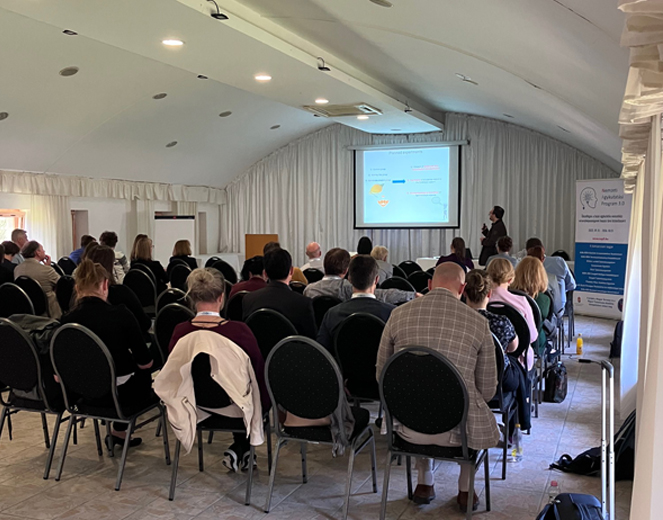 The two-day conference was opened by the program’s director, Academician Zoltán Nusser.
The 18 presentations and 17 posters presented a wide range of research topics, showcasing often surprising results achieved through a variety of experimental methods. Nearly every presentation was followed by numerous questions, and it was characteristic that these discussions continued not only throughout the day but, in some cases, right up until the moment of departure.
Aging is already one of the most significant problems facing our society today, and by 2050, it is estimated that about one-sixth of the world’s population will be over 65. It is understandable that the focus of several research groups at NAP 3.0 is the study of changes in the nervous system and at the molecular level that occur during aging, as well as their consequences.
Despite the serious subject matter, Zoltán Vidnyánszky’s (HUN-REN TTK) presentation managed to put the audience in good spirits. His research, conducted over several years using scientific methods, confirmed the ancient wisdom that (folk) music, (folk) dance, and social connections are among the most effective weapons against aging.
 One of the prerequisites for maintaining cognitive function in old age is the preservation of healthy cerebral microcirculation. The significance of this was confirmed by the findings of István Krizbai’s (HUN-REN SZBK) group, while Anita Kamondi’s (Nyírő Gyula OPAI) research team developed diagnostic methods for the early detection of cognitive decline.
In all research, it is important that the experimental model be as simple/least complex as possible, yet sufficiently complex to answer the questions at hand. Research on depression is of particular importance, as this illness already affects one-fifth of the population today, and in addition to making an individual’s life increasingly difficult, it also renders them unable to work regularly, thus placing a huge burden on society as a whole.
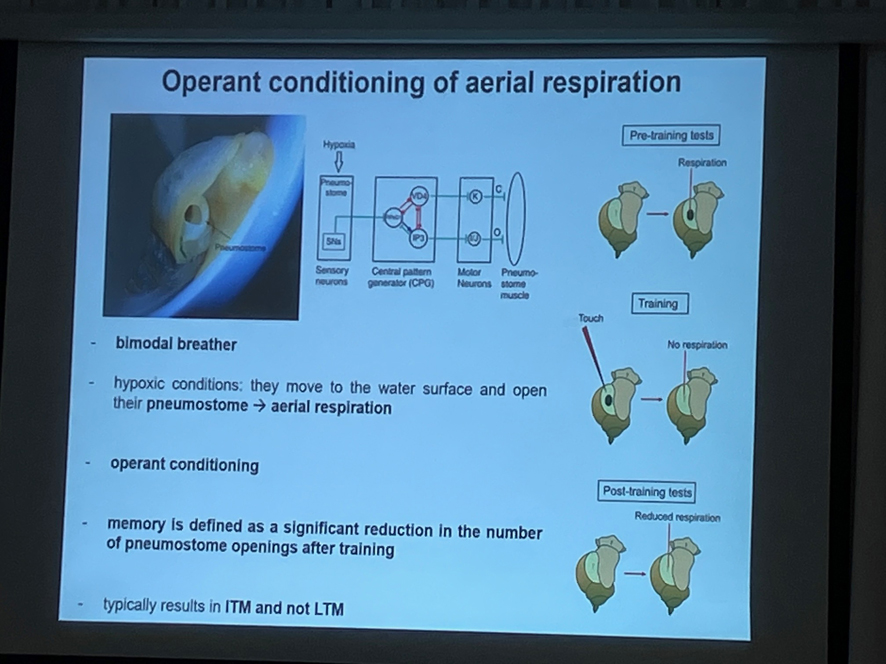
Who would have thought that the lake snail, with its nervous system incomparably less developed than that of humans, could be an excellent research model for studies on anxiety and depression? István Fodor, who studies the nervous systems of invertebrates in Zsolt Pirger’s research group (HUN-REN BLKI), demonstrated in his presentation that the lake snail also exhibits signs of anxiety, which can be alleviated with medication developed for humans.
The NAP3.0 program officially concludes on the last day of August, but we hope that the collaborations initiated so far—which have yielded excellent results—will continue in the future, and that we will hear about further valuable findings that advance neuroscience and benefit society.
The project and conference participants would like to thank Dr. Zsuzsanna Winkler Ungváriné, Innovation Manager and Project Manager of NAP3.0, for her hard work and support over the past four years!